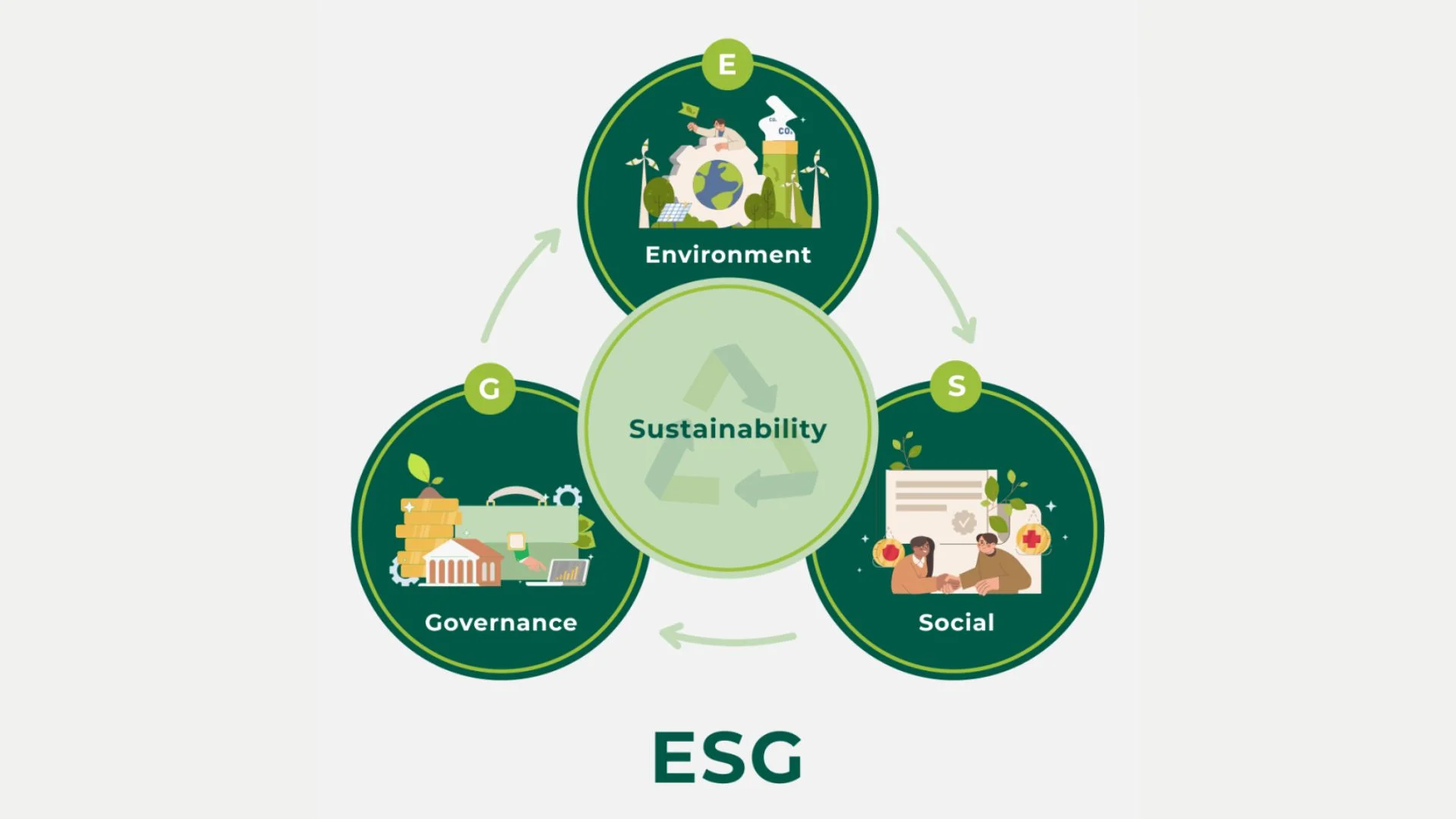
We looked at investment into ESG solutions and how companies are allocating their spend. Leading survey revealed that present-day corporate investment behind ESG solutions is spread evenly across five key categories: operational risk (23% of budget); supply chain due diligence (21%); regulatory enforcement (19%); research, analytics, and news (20%); and, managing and reporting on ESG initiatives and compliance (17%).

While many companies are working with managed service providers to develop and manage ESG approaches in their businesses, focus is increasingly turning to third-party software solutions.
In our interviews with C-suite and functional leaders, we similarly found that investment into ESG solutions is increasing rapidly, with large corporates scaling spend by 2 – 3x over the next two-to-three years. Many companies are looking to replace outdated manual internal processes, such as Excel-based data collection and handling, with third-party tools and are relying more on third-party support.
Looking forward: what companies require from solution providers, With such a diverse range of challenges and growing complexities, it should come as no surprise that companies have new requirements in the area of ESG management, particularly when it comes to the support and the role of third-party tools (and solutions therein). Our research and interviews revealed several areas where companies are seeking solutions to drive better analysis, help avoid risks and traps, and yield better business decision-making that ultimately contributes to sustainable business outcomes. These areas reflect some of the critical needs in response to broader considerations already discussed earlier in this paper, such as the new and fast-evolving ESG-related regulations – sometimes broad-sweeping, others related to specific industries, the need to adapt products and services to better reflect new customer demands, the need to manage risks in the face of more extreme climate events, or the need to tightly manage supply chains in light of geopolitical risks and inflationary pressures. While the range of needs is growing more complex as this space evolves, we have distilled our research findings into five key themes that we hope can help companies focus on areas with the potential for the greatest impact going forward:
- Turning regulatory compliance into business advantage
- Linking ESG trends across consumers, competitors, and the broader media
- Integrating solutions and connections across company operations
- Applying AI and machine learning to enhance data and analytics
- Enhancing supply chain transparency Let’s explore each in depth.
The 2023 State of Corporate ESG: at the crossroads of data, regulations, and digital solutions Turning regulatory compliance into business advantage Many companies we spoke with are seeking to create custom ESG programs that cater to their unique company and industry needs. Understanding regulations across geographies, and their relevance for specific industries, is a critical component. For larger companies, this must happen “at scale,” meaning, across their business and without gaps. This is an area where software can help, but also where companies are seeking honesty and transparency from third-party providers around what they can and can’t deliver, expecting clarity around existing gaps and how these can be addressed. With so many different regulatory standards and approaches emerging, companies are turning to solutions for guidance on: Which emerging regulations are coming and how these will impact their businesses. For example, companies need guidance on how ESG topics affect a company’s accounting policies, now and in the future, or to help make sense of the disclosure requirements on the horizon.
How they can adopt such regulations. For example, TCFD reporting, and what processes they need in place to meet these requirements.
In what ways they can prepare for emerging regulation. Some are seeking to get ahead of the pack, others are seeking to ensure compliance.
How their business can meet the most standards as efficiently as possible, ideally seeking “bang for buck” in their initiatives to get the most mileage from the actions they take. For example, determining whether meeting a certain labor standard can boost their ESG rating (attracting investors) yet also help qualify for B Corp status (attracting talent and customers. How they can operate in areas with regulatory gaps. For example, Scope 3 measurement and reporting, or carbon offsetting. The 2023 State of Corporate ESG: at the crossroads of data, regulations, and digital solutions “There are probably 40 different frameworks out there – from TCFD, CDP, ISSB, UN Development Goals, SBTI – and they all have their own slant, with their own weighting, so we must think about getting the best bang for buck for which we go for. There isn’t an aligned domestic or global platform for reporting, ratings agencies, and proxy guidance – this is an opportunity for the industry.” – CSO, gold mining company Linking ESG trends across consumers, competitors, and the broader media,
As discussed earlier in this paper, some executives we spoke with – particularly at consumer-facing companies but also beyond – highlighted the challenges of becoming an ESG-oriented company. Green packaging, for example, might intuitively seem like a good move, but it could easily create a backlash if a company doesn’t do it well, if they don’t communicate it to consumers, or if they don’t communicate it to customers in a way that is authentic and aligned with their brand identity. Earlier in the paper we also looked at the consumer demand side of this, with consumers increasingly voting with their wallets for companies that they perceive as doing good, often looking for strong alignment with ESG principles.
Understanding consumer trends, monitoring competitor activities around ESG, and understanding how relevant topics and trends are being discussed or perceived is thus critical to avoiding missteps. Solutions in this area include: • Consumer insights tracking on ESG-relevant topics, such as understanding the importance of key ESG topics from plastics to emissions Monitoring competitor actions around ESG – either from annual reports, media monitoring, or ESG reports. For example, understanding their overall commitments, new product launches, their stances on relevant issues, but also mistakes and missteps and consumer reactions to these.
Integrating solutions and connections across company operations Our research identified that streamlined, integrated, and holistic approaches to data management are seen as critical to driving cross-company collaboration – in particular across the many stakeholders involved in delivering ESG actions. Several leaders we spoke with mentioned the desire to better understand their company’s entire risk universe through this exercise as well. We found a core desire to bring tools and solutions together and to integrate data across key enterprise-level tools so that information flows more freely across an organization. For complex businesses operating in many geographies, the ability to align data, systems, and tools across geographies – and ideally harmonize tools across suppliers – would create significant operational efficiencies. This must be combined with honesty and transparency from solutions providers around what they can and can’t deliver. We found a consistent sense of skepticism in what providers are promising and that ESG leaders are regularly bombarded with new solutions. Core requirements in this area include:
Integrated end-to-end solutions and approaches, such as with ERP systems, supplier portals and vendor management systems. Broader solution sets under one roof, with providers being able to deliver more than one capability to streamline the number of solutions, but without forgoing quality, such as industry and company-specific solutions or guidance. Connecting with ERP, procurement, and customer management systems to help data and insights flow across the company. Turning disparate ESG data into actionable insights useful for key stakeholders to the ESG agenda, such as procurement and sourcing, vendor management, compliance, or sales and marketing. For B2B suppliers, the ability to integrate with customer tools and solutions of choice to reduce workloads down the supply chain “We need a systems approach, a 360-degree perspective. A lot of solutions deliver against what’s required but what about the bigger picture? What about the implications for the business?” – Sustainability Policy Lead, global technology leader “We are looking for system integrators to combine solutions and find synergies. But if they can’t deliver 90% satisfaction levels, I’d rather they say it.” – Energy Procurement & Sustainability, global consumer goods company The 2023 State of Corporate ESG: at the crossroads of data, regulations, and digital solution.
Enhancing supply chain transparency Time and time again we heard from ESG leaders that their companies are struggling to fully engage suppliers with new ESG-related requirements. Know Your Customer and other enhanced due diligence processes are becoming more critical considering new regulations, labour standards, and customer requirements – in particular driven by large consumer brands. Yet suppliers are often too small, under-resourced, or operate in geographies with poor transparency and reporting standards to fully comply. Corporates need support building good solutions in this area, or at least in terms of finding alternative suppliers that can meet these new requirements. For companies seeking to reduce their GHG emissions specifically, this is a critical area, as this often can’t be done without reducing Scope 3 emissions; that is, those emissions that take place at the level of a company’s suppliers. There are also industry-specific challenges, such as in chemical storage and usage, where inadequate audit control of product safety and working standards are often a result of poor procurement and tracking systems in producer countries. Similarly, reporting mandates often lack important data because companies are not required to disclose sub-suppliers’ information and, if they become liable to do so, can circumvent legal liability to defend competitive advantage for confidentiality reasons and thus further undermine the quality of data on reporting. In building supply chain transparency, companies need increased support with:
2023 has proven yet again that we are navigating complex and challenging times with continued visible impacts the world over. Businesses generally recognize the challenge and are thus orienting towards building more sustainable, resilient business models. Through our research we found that 71% of C-suite and functional leaders agree or strongly agree that the role of ESG in corporate performance will grow in the future. Companies are also facing a rapid evolution in three key areas that will dramatically affect progress. These are:
- Data: primarily spurred by advances in AI
- Regulations: evolving quickly around the world and impacting many new areas
- Digital Solutions: rapidly maturing to bring new capabilities and insights to companies in the area of ESG.
By embracing these areas and tackling the three key areas highlighted above, companies and solutions providers can advance ESG from being an overall burden that must be managed, to instead being a driver of better business decisions and growth. It is business leaders who steer and manage ESG initiatives successfully that will turn words into actions and help their businesses thrive and succeed in this new era.